
A Facility Manager’s Guide to Lockout/Tagout Devices — Powered by ZING™
Jan 2nd 2026
How to close dangerous gaps, avoid OSHA citations, and modernize your LOTO program with the right devices.
Powered by ZING® Green Safety Products
Published: January 2026
Lockout/Tagout (LOTO) remains one of OSHA’s Top 10 most frequently cited standards year after year. In preliminary Fiscal Year 2025 data, it ranked #4 with over 2,100 violations—while FY 2024 saw nearly 2,500 citations and millions in penalties.
Behind these numbers are often foundational gaps: incomplete machine-specific procedures, inadequate training, or missing annual inspections. But even facilities with solid written programs can face real-world failures when lockout devices don’t fit properly, aren’t durable enough, or aren’t readily available—leading to bypasses, improper application, and heightened risk.
This guide helps you assess your program’s strengths and weaknesses, identify overlooked energy sources, and select exact-fit devices to make compliance practical and effective.
Common LOTO Citation Drivers (Based on OSHA data)
- Machine-specific procedures incomplete or missing → (c)(4)
- Insufficient training/retraining → (c)(7)
- No/lacking annual inspections → (c)(6)
- Improper device application/verificaton/isolation → (d)
Note: While devices themselves are rarely the top-cited issue, ill-fitting or substandard ones often contribute to application failures.
Important Note on Lockout vs. Tagout
OSHA strongly prefers lockout over tagout whenever an energy-isolating device is capable of accepting a lock, because locks provide superior physical prevention of energization (29 CFR 1910.147(c)(3)). Tagout is permitted only when lockout is not feasible, and employers must demonstrate equivalent protection through full tagout compliance plus additional measures—such as removing an isolating circuit element, blocking a controlling switch, opening an extra disconnect, or removing a valve handle. Prioritizing lockout-capable devices and retrofitting equipment where possible delivers the highest level of employee safety and aligns with OSHA’s intent.
60-Second LOTO Health Check (Take It Right Now)
OSHA’s standard 29 CFR 1910.147, The Control of Hazardous Energy (Lockout/Tagout), establishes requirements for protecting employees during servicing and maintenance. Use these 10 questions—drawn from the standard’s core elements—to evaluate your program.
Answer Yes or No — be honest:
When determining whether you have the correct types and sufficient quantities of lockout devices for your facility, follow these simple yet effective steps to ensure full coverage and compliance:
Step 1: Map Every Source of Hazardous Energy
You can't protect what you haven't mapped. Before you worry about tags, padlocks, or procedures, you need a cmoplete inventroy of every hazardous energy source in your facility.
During your walk-through, make sure you capture more than just hte main disconnects. Most LOTO gaps come from secondary or non-traditional sources that live in the corners of the plant.
Commonly overlooked sources include:
- Electrical panels, and disconnects non-local, stored electricity
- Pneumatic quick-connects and hydraulic lines
- Mechanical hazards (flywheels, springs, counterweights, chain drives)
- Gravity hazards (raised loads, suspended equipment, vertical lifts)
- Thermal hazards (steam valves, hot oil lines, heated piping)
- Stored pressure (accumulators, gas cylinders)
Involve maintenance, engineering, and operators in a facility walk-through. One unidentified isolation point can compromise an entire procedure.
Step 2: Match the Correct Lockout Device to Every Energy Source
“Close enough” devices invite bypasses and noncompliance. Either a device is securely lockout out or it isn't. Always select devices that provide an exact, secure fit to prevent removal without proper authorization.
Below are common energy sources and recommended ZING® lockout solutions engineered for reliable application.
Electrical Lockouts (Panels, Plugs, and Breakers)
| Energy Source | Recommended ZING® Device | Key Benefit | Typical Use |
|---|---|---|---|
| 120–550 V plugs | ZING® Plug Lockout, Red, Large, 4-Hole | Prevents plug insertion; supports multiple padlocks | Cord-and-plug equipment |
| Miniature circuit breakers | ZING® Miniature Circuit Breaker Lockout, Red | Tool-free, fast application | Most miniature breakers and switches |
| Large molded-case breakers | ZING® Universal Breaker Lockout solutions | Covers a wide range of breaker frames | Mixed-brand panels |
| 480–600 V disconnects | ZING® Oversized Breaker/Disconnect Lockout | Secures wide-throw handles | Large disconnect handles |
Valve Lockouts (Ball, Gate, and Butterfly)
| Valve Type | Recommended ZING® Device | Fit Range |
|---|---|---|
| Ball valves | ZING® Ball Valve Lockout, Adjustable, Red, Large | Broad range of handle sizes (see product specs) |
| Gate valves | ZING® Gate Valve Lockout (various sizes) | Approx. 1" – 13" |
| Butterfly valves | ZING® Butterfly Valve Lockout | Approx. 1" – 8" diameter |
| Small inline / lever valves | ZING® Cable Lockout + Mini Cable | Any lever with ≥ 1/4" hole |
Pneumatic and Group Lockout
| Source | Recommended ZING® Device | Typical Use |
|---|---|---|
| Pneumatic quick-connects | ZING® Plug-Pneumatic Lockout, Red, 4-Hole | Compressed air lines at tools/drops |
| Group lockout (multiple workers) | ZING® Group Lockout Boxes | Large maintenance involving teams |
Featured LOTO Essentials from ZING®
Standardize on durable, color-coded devices for common scenarios. These ZING® essentials help simplify training, speed up lockout, and support OSHA-compliant energy control.
|
LOTO Essential
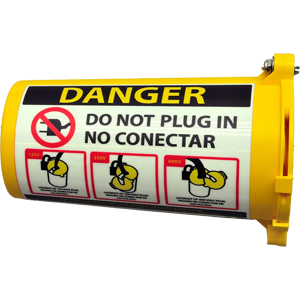 Plug Lockout, Red, Large, 4-HoleEncloses 220/500 V plugs with a 4-hole design that supports multiple padlocks to help prevent reconnection during service. Use: Cord-and-plug equipment control |
LOTO Essential
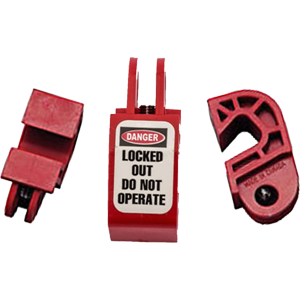 Circuit Breaker Lockout, RedUniversal design fits most standard breakers and main switches for fast, secure isolation. Use: Electrical panel isolation |
|
LOTO Essential
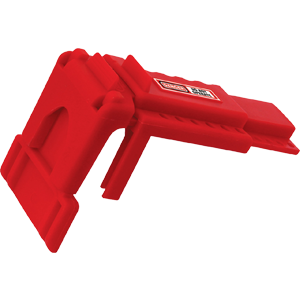 Ball Valve Lockout, Adjustable, Red, LargeLocks ball valves in the on or off position across a wide size range to secure liquid and gas flow. Use: Liquid and gas isolation |
LOTO Essential
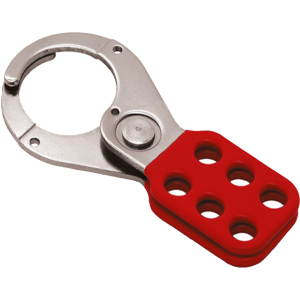 Coated Steel Hasp, Red, 1.5" Jaw DiameterSupports group lockout by allowing multiple employees to apply their personal padlocks to a single isolation point. Use: Group lockout |
Step 3: Build or Refresh a Bulletproof LOTO Program
Your program must include, at minimum:
- A comprehensive energy control program
- Machine-specific energy control procedures
- Employee training and communication
- Appropriate lockout devices
- Annual audits and inspections
The most impactful improvements often come from addressing OSHA's most frequently cited LOTO deficiencies:
- Machine-specific procedures incomplete or missing → 1910.147(c)(4) (historically the #1 cited provision)
- Insufficient training/retraining → 1910.147(c)(7)
- No/lacking annual inspections → 1910.147(c)(6)
- Improper device application/verification/isolation → 1910.147(d)
Additionally, ensuring exact-fit devices at every isolation point and organizing them for easy access supports effective application and reduces errors.
Ready to Strengthen Your LOTO Program?
Download the free 2026 LOTO Compliance Kit from ZING® Green Safety Products. It includes:
- Machine-specific procedure template (fillable)
- Energy source mapping worksheet
- Device selector checklist
- Lockout station & shadow-board planner
This guide provides general information only and is not a substitute for site-specific procedures, risk assessments, or professional advice.