
Gas Cylinder Safety Guide
Posted by Zing Green Products on Jan 17th 2022
Compressed Gas Cylinder Safety
Compressed gas cylinders are essential for brazing, welding, and more—but an unplanned energy release can cause severe injury or death. If contents are discharged accidentally or unsafely, a cylinder can become a dangerous projectile. Contents may also be hazardous or react with other chemicals. A compliant program requires site-specific procedures and effective training. Below are best practices for labels, storage, handling, inspection, and emergency readiness.
General Best Practices
- Keep cylinders away from flames, sparks, and electrical circuits.
- Never use oxygen as a substitute for compressed air; avoid oil/grease exposure around oxygen.
- Only authorized employees may refill tanks.
- After each job, close valves and bleed lines when possible.
- For empty cylinders: close valves, bleed system, remove regulator, mark “Empty,” and move to the designated area.
Cylinder Labeling
Cylinders must clearly identify contents. If a label is missing, illegible, or unclear, do not use the cylinder. If contents can’t be determined from the label, mark “contents unknown” and return it to the manufacturer. Do not rely on cylinder or cap color—color schemes vary by manufacturer.
Handling & PPE
Use appropriate PPE—typically safety footwear and safety glasses, especially when connecting/disconnecting regulators and lines. Additional PPE may be required based on gas type and task (e.g., gloves to prevent frostbite with oxygen, nitrogen, CO2). Review the relevant safety data sheet (SDS) before work begins.
Securing Cylinders
An unintended release can propel cylinders (often 100+ lbs) at high speed. Secure cylinders to prevent serious injury or damage:
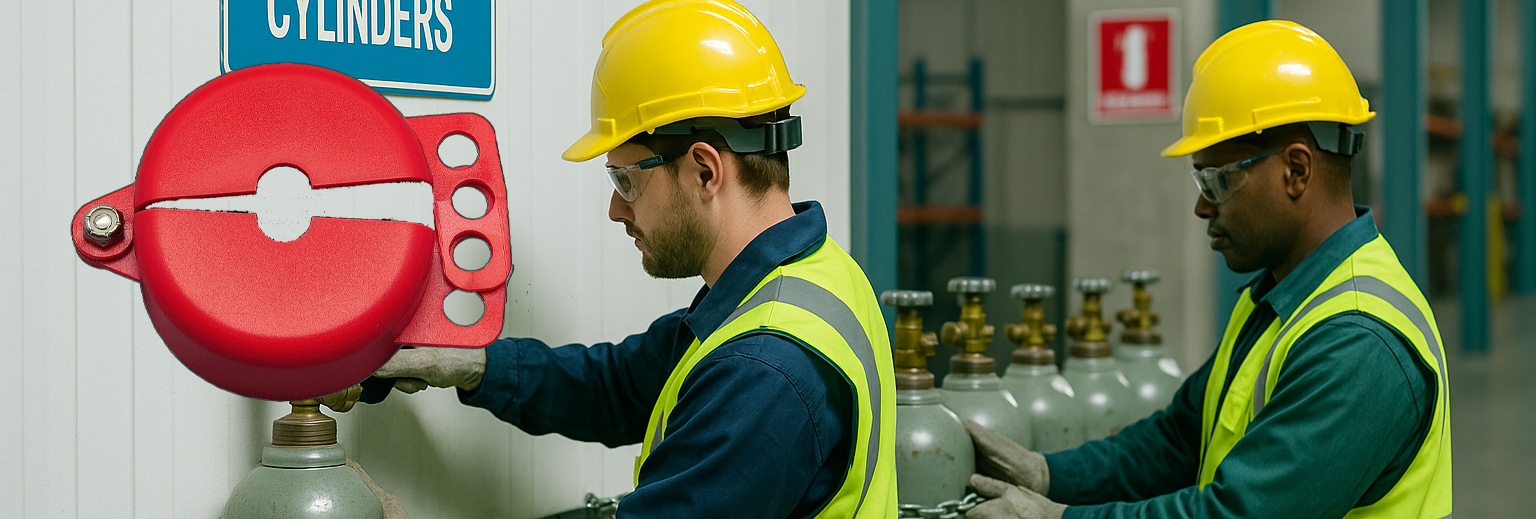
Use chains, plastic-coated wires, or heavy straps. Secure at the upper half of the cylinder. Do not secure multiple cylinders with one chain.
Cylinder / Valve Outlet / Regulator Connections
Outlet connections are designed to prevent mixing incompatible gases—never use adapters to force connections. Regulators are typically gas-specific. Do not apply oil or grease to fittings (can react dangerously with some gases).
Opening & Closing Valves
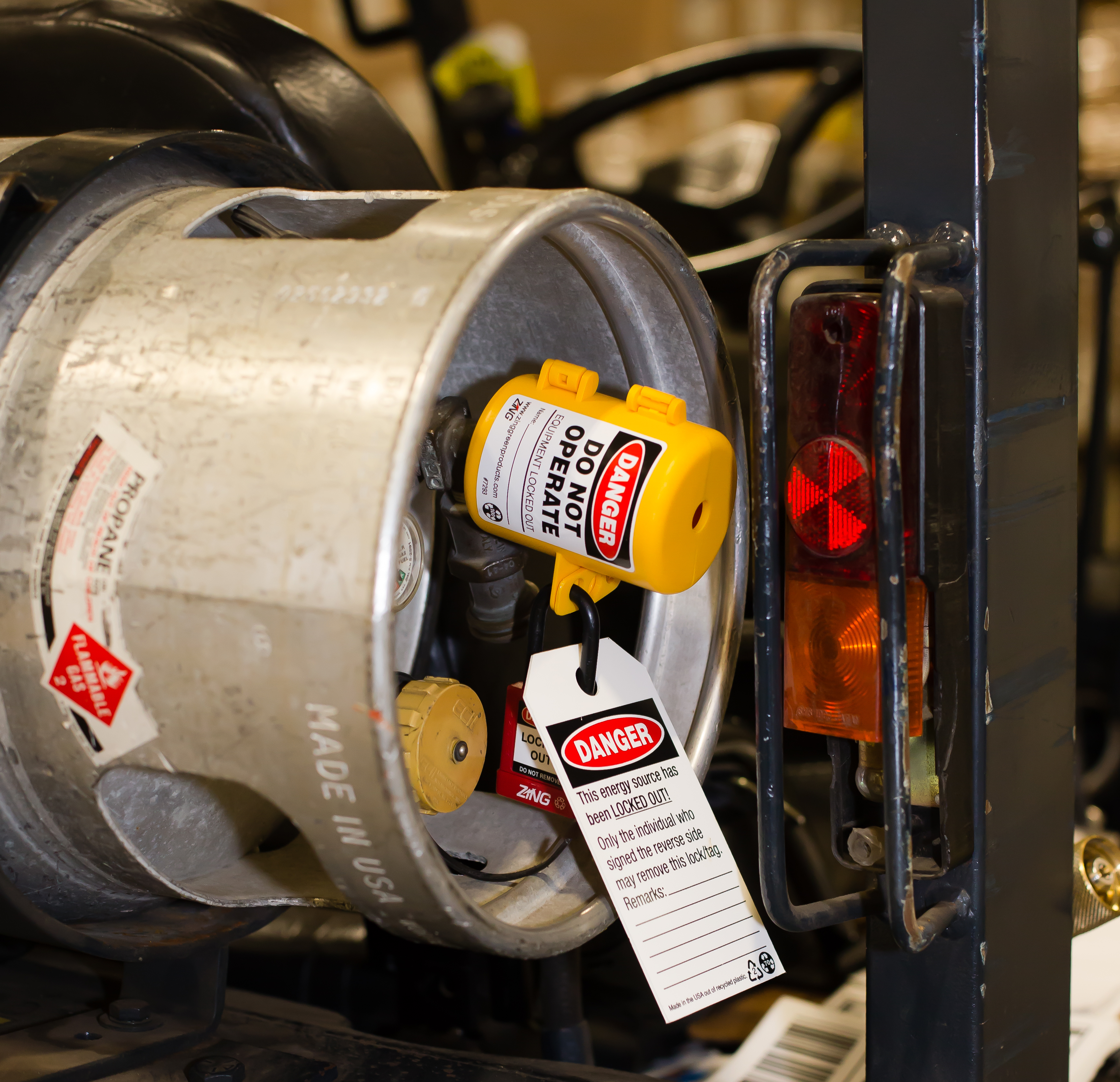
Valves use a hand wheel or valve stem. Before opening, alert nearby employees and point the valve away from you. Keep valves closed when not in use—even on empty cylinders—to prevent moisture ingress and deterioration.
Inspecting Before Use
Keep cylinders in well-ventilated areas. Check for leaks via gauges: the high-pressure gauge shows pressure between valve and regulator; the low-pressure gauge shows pressure between regulator and torch. If only a low-pressure gauge is present, open the valve, slowly back off the regulator screw, and spray connections with a soap solution. Use approved combustible gas detectors—never an open flame.
Storage & Transportation
- Store in clean, well-ventilated areas, free of oil/grease; temperature ≤ 125°F; post No Smoking signage.
- Segregate incompatible gases. Separate flammables and oxygen by ≥ 20 ft or a rated firewall (≥ 5 ft high, ≥ ½-hour rating).
- For transport, remove regulator and install valve-protection cap. Space cylinders adequately; on carts, move one at a time.
Conclusion & Standards
Cylinders are indispensable—but bring projectile, explosion, chemical, and fire hazards. A strong program with clear procedures, proper labeling, correct connections, diligent inspection, and secure storage prevents incidents and protects people.