

Find the Right Safety Signs for Your Workplace
Jun 16th 2016

Signs are an essential part of workplace safety. This guide will help you choose the right signs for your facility by reviewing sign materials, key OSHA compliance requirements, and practical ways to maximize safety while controlling costs.
Sign Materials
Safety signs are available in a variety of materials. The most common options are aluminum, plastic, and adhesive labels. Each can be a great choice depending on where and how the sign will be used. The overviews below summarize the strengths and typical applications of each type.
Aluminum Signs
- Excellent for outdoor use. Reflective sheeting is required for traffic or parking applications.
- Very durable; can provide 5–10 years of performance depending on conditions.
- Lightweight, strong, and will not rust.
Plastic Signs
- Ideal for indoor and select outdoor applications.
- Common materials such as polyethylene and polypropylene are weather- and chemical-resistant and will not crack or peel.
- Typical service life is 5–10 years.
Adhesive Signs & Labels
- Space-saving option that mounts directly to smooth, hard surfaces.
- Excellent for glass doors, windows, and equipment panels.
- Typical service life is 2–5 years.


Choosing the right material helps ensure your signs perform as expected.
Compliance
Safety signs are one of the most effective tools for communicating hazards and safe practices. OSHA standard 1926 Subpart G outlines when and where signs are required. The summary below highlights key requirements, but employers should review the full standard here.
OSHA groups safety signs into three main categories: Danger, Caution, and Safety Instruction signs.
Danger Signs
- Used where an immediate hazard exists.
- Must use red, black, and white as specified by OSHA.
Caution Signs
- Used where potential hazards or unsafe practices may cause minor or moderate injury.
- Must use yellow and black in the required format.
Safety Instruction Signs
- Used where specific safety instructions or procedures must be communicated.
- Typically use green, white, and black.
Maximizing Safety With Signage
OSHA’s requirements are an excellent starting point, but many facilities go beyond the minimum to improve visibility and reduce risk. The following sign types—projecting signs, posters, and facility policy signs—are especially effective at reinforcing a safety-first culture.
Projecting Signs
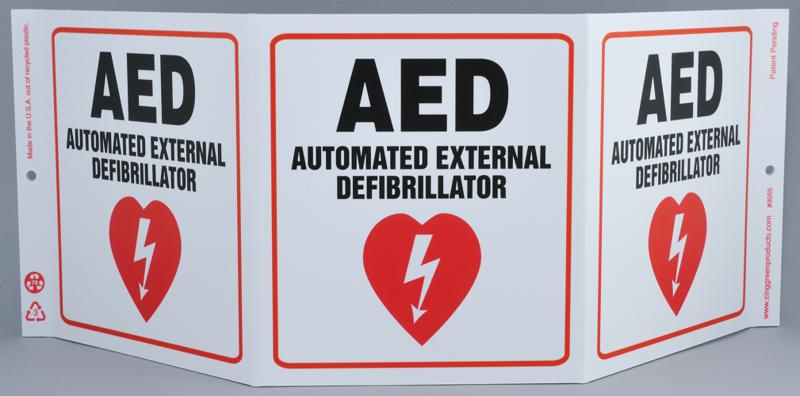
Projecting signs extend out from the wall and can often be a best practice for critical locations. Because they can be seen from multiple directions, they improve visibility in busy aisles and long corridors. Exits, weather shelters, AEDs, fire extinguishers, and alarms are common locations where projecting signs add value.
Popular formats include “L,” “V,” and three-sided designs. L-shaped signs take less mounting space, V-shaped signs provide added visibility from two directions, and three-sided signs deliver maximum visibility for your most critical equipment and egress points.
Three-sided projecting signs offer maximum visibility for critical equipment.
Posters
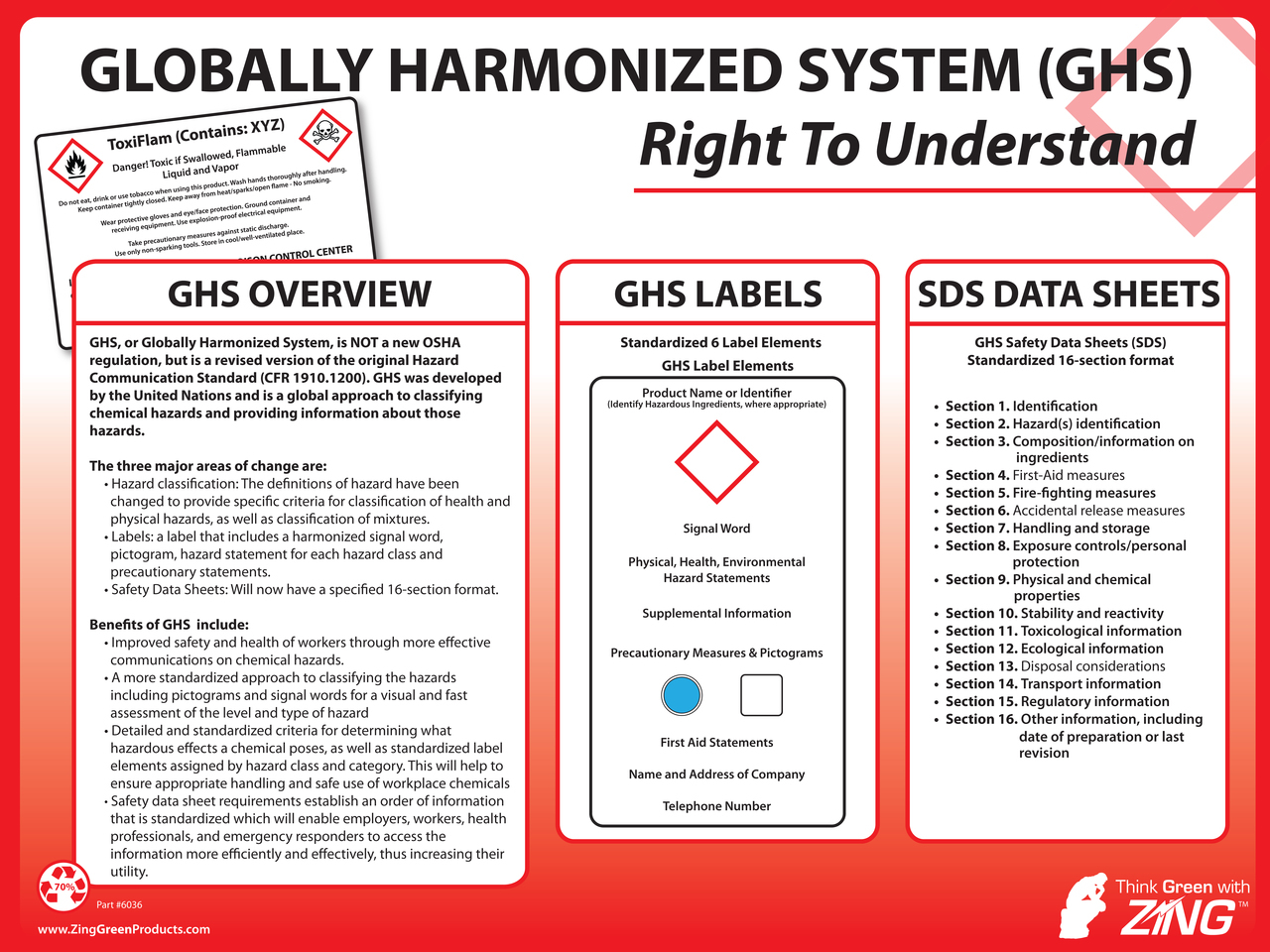
Posters are a simple, highly visual way to keep employees informed. They can reinforce Lockout/Tagout procedures, GHS/HazCom information, PPE requirements, or general safety best practices. Strategically placing posters in breakrooms, training areas, and near workstations helps strengthen your safety message and promote a consistent safety mindset.
Posters provide clear, easy-to-read reminders of critical safety information.
Facility Identification and Policy Signs
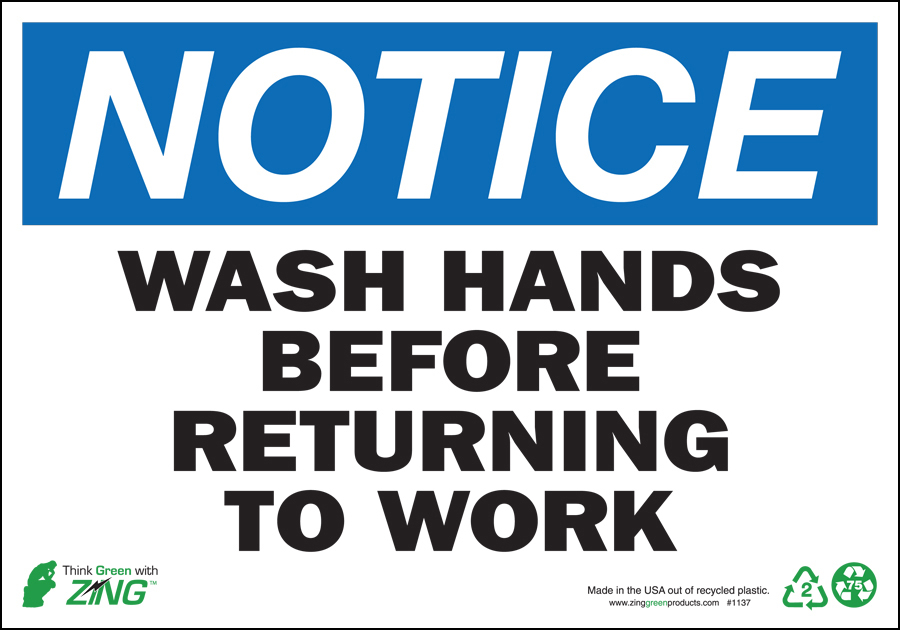
Facility identification and policy signs communicate important safety locations and expectations for employees and visitors. Examples include handwashing reminders, PPE requirements, restricted areas, and general notice signs. Clear messaging can help prevent illnesses, injuries, and costly mistakes.
Go Green, Save Money
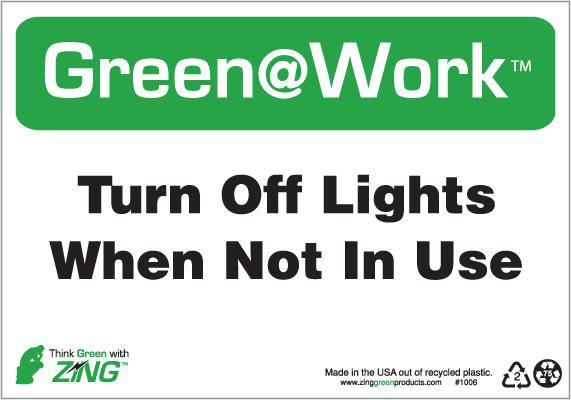
Signage can also support more efficient and sustainable operations. Energy conservation and recycling signs remind employees to turn off lights, reduce printing, conserve water, and separate recyclables. Placing these messages near switches, printers, and faucets can significantly reduce waste and help lower utility and supply costs.
Well-placed facility signs can encourage cost-saving, resource-conscious behavior.