Lockout/tagout procedures are built around one simple but critical idea: equipment should never be restarted, re-energized, or released from a locked-out condition until every authorized worker is safely clear.
That is where the “one key, one lock” rule matters.
In industrial, manufacturing, maintenance, and utility environments, workers may be exposed to many forms of hazardous energy, including electrical, mechanical, hydraulic, pneumatic, chemical, thermal, or stored energy. When equipment is being serviced or repaired, that energy must be controlled before work begins.
A lockout/tagout program helps prevent unexpected startup, accidental energization, or the release of stored energy while employees are working on or near equipment. But the program only works when every authorized worker has personal control over their own protection.
What Is Lockout/Tagout?
Lockout/tagout, often called LOTO, is a safety process used to isolate machinery or equipment from hazardous energy before service or maintenance work begins. The goal is to make sure equipment cannot be started, activated, or released until the work is complete and employees are safely out of harm’s way.
A typical lockout/tagout process includes identifying energy sources, notifying affected employees, shutting down the equipment, isolating the energy, applying lockout devices and tags, releasing stored energy, and verifying that the equipment is in a zero-energy state before work begins.
That last step is especially important. Before maintenance or repair work starts, authorized employees should verify that the machine or equipment cannot operate. A lock on its own is not enough if the energy source was not properly isolated or stored energy remains in the system.
Why “One Key, One Lock” Is So Important
The “one key, one lock” rule gives each authorized worker direct control over their own safety.
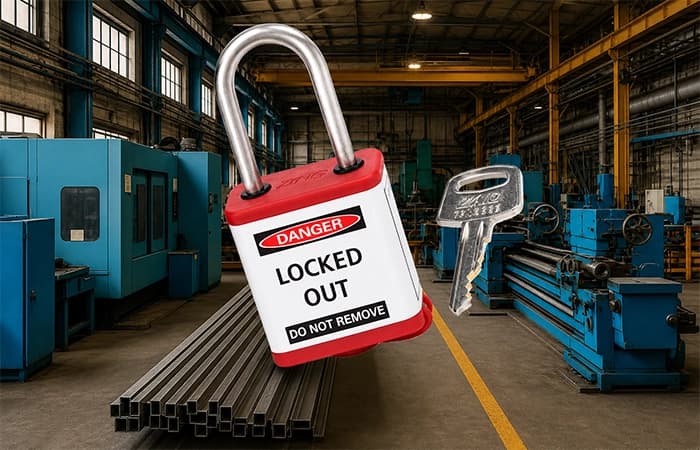
Each worker places their own lock on the energy-isolating device, lockout hasp, or group lockout box. That worker keeps the only key to their lock. As long as their lock remains in place, the equipment cannot be fully re-energized.
This creates a clear visual and physical safeguard. If five people are working on a machine, there should be five personal locks in place. Each lock represents a person who is still protected by the lockout. The equipment cannot return to service until each worker has completed their work, inspected the area, and removed their own lock.
This is more than a procedural detail. It helps prevent confusion, shortcuts, and dangerous assumptions.
Personal Control Supports Personal Safety
One of the most important parts of lockout/tagout is accountability. When every worker controls their own lock and key, there is less room for guessing.
No one has to wonder whether a coworker is still inside a machine, behind a panel, under a conveyor, or working on a component. If their lock is still attached, they are still protected.
Personal locks also help avoid one of the most dangerous situations in maintenance work: someone restarting equipment because they believe the job is finished. The lock provides a physical barrier, and the tag provides information about who applied it and why.
Together, they help communicate that the equipment is not ready to operate.
Group Lockout Requires the Same Discipline
Many maintenance jobs involve more than one worker, trade, department, or shift. In those situations, group lockout procedures may be needed.
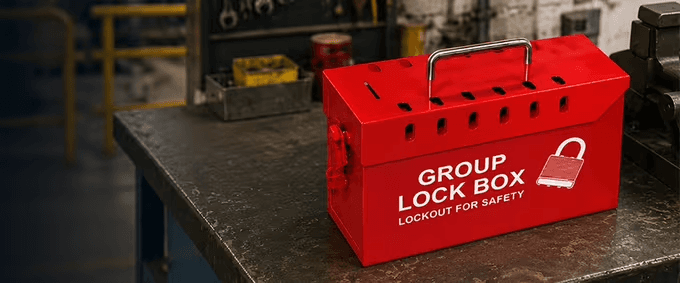
Group lockout often uses lockout hasps, group lock boxes, or other devices that allow multiple employees to apply their own personal locks. Even when a group system is used, the principle remains the same: each authorized worker should maintain control of their own lock.
A supervisor or lead employee may coordinate the process, but that does not replace personal lockout responsibility. Each person working on the equipment should have a way to lock on before beginning work and remove their own lock when their part of the job is complete.
This keeps the process clear and helps prevent premature startup when multiple people are involved.
Tags Help Communicate Critical Information
Locks provide the physical control. Tags provide the message.
A lockout tag should clearly communicate important information, such as who applied the lock, why the equipment is locked out, and when the lockout was applied. This helps affected employees, supervisors, and other authorized workers understand the status of the equipment.
Tags should never be treated as a replacement for lockout devices when lockout is required and physically possible. A tag can warn, identify, and explain, but it does not provide the same physical restraint as a lock.
For a stronger lockout/tagout program, locks and tags should work together.
Common Lockout/Tagout Mistakes to Avoid
Even a well-written lockout/tagout program can become weak if employees are allowed to take shortcuts. Some of the most common mistakes include sharing keys, using one lock for multiple people, skipping verification, failing to release stored energy, or removing another person’s lock without following a documented procedure.
Another common issue is relying on memory instead of written procedures. Equipment can have multiple energy sources, and some are not obvious at first glance. A machine may be electrically disconnected but still contain hydraulic pressure, compressed air, elevated parts, thermal energy, or stored mechanical force.
That is why preparation and verification are so important. Workers need to understand the specific equipment they are servicing, the type and magnitude of energy involved, and the correct method for controlling it.
What a Strong LOTO Program Should Include
A strong lockout/tagout program starts with clear written energy control procedures. These procedures should identify the equipment, list the energy sources, explain the shutdown and isolation steps, describe how stored energy is controlled, and outline how employees verify that the equipment is safe to service.
Training is also essential. Authorized employees need to know how to apply lockout/tagout procedures correctly. Affected employees need to understand why the equipment is locked out and why they must not attempt to restart or use it. Other employees in the area should also understand the purpose of the program and the importance of respecting lockout/tagout controls.
Routine inspections and audits help keep the program from drifting over time. They also help identify gaps in training, procedures, equipment, or day-to-day practices before those gaps become incidents.
Lockout/Tagout Is About More Than Compliance
OSHA’s lockout/tagout standard, 29 CFR 1910.147, addresses the control of hazardous energy during service and maintenance. Compliance is important, but the real purpose of lockout/tagout is bigger than a checklist.
It is about making sure people go home safely.
The “one key, one lock” rule reinforces that purpose. It gives each worker control over their own protection. It makes the lockout status visible to others. It reduces confusion during maintenance. And it helps prevent equipment from being restarted before every worker is clear.
Building a Safer Lockout/Tagout Process
The best lockout/tagout programs are simple enough to follow, specific enough to be effective, and consistent enough to become part of everyday work.
Using uniquely keyed padlocks, durable lockout tags, lockout hasps, group lockout boxes, and the proper lockout devices can help support safer maintenance practices. But the tools are only part of the system. Employees also need clear procedures, effective training, and a workplace culture that does not reward shortcuts.
When each authorized worker applies their own lock, controls their own key, and removes their own lock only when the work is complete, the message is clear: no one else gets to decide when that person is safe.
“One key, one lock” may sound simple, but it is one of the most important principles in lockout/tagout safety.
Need Lockout/Tagout Products for Your Facility?
ZING offers lockout/tagout padlocks, hasps, tags, stations, kits, and devices designed to help support safer energy control practices. Browse our lockout/tagout products or contact our team for help choosing the right options for your facility.