Forklifts are a daily workhorse in warehouses, manufacturing plants, distribution centers, and industrial facilities. They move materials, support productivity, and keep operations running. But when a forklift is being serviced, inspected, repaired, or cleaned, that same equipment can become dangerous if hazardous energy is not properly controlled.
That is where forklift lockout/tagout comes in.
Lockout/tagout, often called LOTO, helps prevent unexpected startup, movement, or release of stored energy while maintenance work is being performed. OSHA’s Control of Hazardous Energy standard outlines procedures for controlling hazardous energy during servicing and maintenance, including employee training and periodic inspections.
For forklifts, a good lockout process is not just about turning off the key. It is about making sure the truck cannot start, roll, lift, tilt, or release stored energy while someone is working on it.
Why Forklift Lockout Matters
A forklift may look harmless once it is parked, but several systems can still create risk during maintenance. Electrical circuits, batteries, hydraulic pressure, fuel systems, raised forks, mast movement, and stored mechanical energy can all create hazards if they are not isolated or controlled.
Proper forklift lockout helps protect workers from:
Unexpected startup
Unintended rolling or movement
Fork or mast movement
Hydraulic pressure release
Contact with energized electrical components
Fuel-related hazards
Crush, pinch, or struck-by injuries
A written, repeatable forklift lockout procedure gives maintenance teams and operators a clear process to follow, rather than relying on memory or quick assumptions.
What Needs to Be Controlled on a Forklift?
Forklifts have multiple energy sources, and each one should be considered before service begins. Depending on the type of forklift and the maintenance task, energy sources may include:
Electrical energy from batteries, ignition circuits, charging connections, or electric drive systems.
Hydraulic energy from lift, tilt, and attachment systems that may remain pressurized.
Mechanical energy from raised forks, mast components, wheels, or moving parts.
Fuel energy from LPG, diesel, gasoline, or other fuel systems.
Stored energy from pressure, gravity, elevated components, or parts that may shift during repair.
Before beginning work, employees should review the specific forklift, the task being performed, and the manufacturer’s instructions.
A Practical Forklift Lockout Process
A strong forklift lockout process should be simple enough to follow every time, but detailed enough to control the real hazards. Here is a practical step-by-step layout.
1. Prepare for the Work
Before touching the forklift, identify the energy sources involved. Consider the battery, fuel supply, ignition, hydraulics, parking brake, mast, forks, and any attachments.
Employees should also understand the scope of the work, the equipment being serviced, and what lockout devices will be needed.
2. Notify Affected Employees
Let operators, nearby workers, and affected team members know that the forklift will be locked out for service. This avoids confusion and helps prevent someone from attempting to use or move the equipment.
Move the forklift to a safe location when possible, away from traffic areas or active work zones.
3. Park and Shut Down the Forklift
Park the forklift on level ground. Lower the forks or mast completely, place the controls in neutral, set the parking brake, and turn the key to the OFF position.
If there is any chance of movement, chock the wheels before continuing.
4. Isolate the Energy Sources
Disconnect or isolate the power source. For electric forklifts, this may include disconnecting the battery or plug connection. For fuel-powered forklifts, this may include shutting off or isolating the fuel supply.
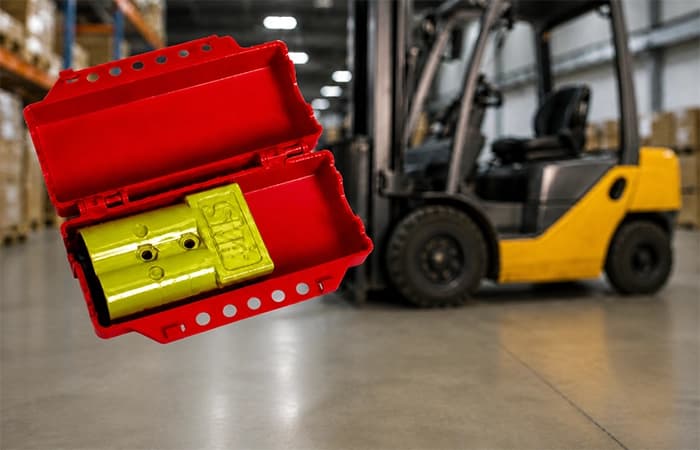
Use the appropriate lockout device for the energy source being controlled. This may include a plug lockout, battery lockout, padlock, lockout tag, or other approved device.
5. Apply Personal Locks and Tags
Each authorized employee performing the work should apply their own lock and tag. The tag should clearly identify who applied the lock and why the forklift is locked out.
Avoid shared locks or shared keys. The person who applies the lock should be the person who removes it, unless an approved emergency removal procedure is followed.
6. Release Stored Energy
Stored energy is one of the biggest areas where forklift lockout can get overlooked.
Lower forks fully. Relieve hydraulic pressure. Secure the mast or any raised attachments. Move controls to neutral and verify that parts cannot shift, drop, or move unexpectedly.
7. Verify Zero Energy
Before service begins, verify that the forklift has been fully de-energized. Attempt to start the forklift according to your procedure to confirm it will not energize or move.
This verification step is important because lockout is not complete until the equipment has been tested and confirmed safe.
8. Perform the Maintenance or Repair
Once lockout has been applied and verified, maintenance work can begin. Locks, tags, and devices should remain in place for the entire service process.
If multiple employees or departments are involved, make sure each person follows the established lockout procedure.
9. Restore the Forklift Safely
When work is complete, inspect the area before re-energizing the forklift. Remove tools, parts, and materials from the work zone. Confirm that guards, covers, and components have been reinstalled.
Each authorized employee should remove their own lock and tag. Once the area is clear and employees are safely positioned, reconnect power or fuel and test the forklift before returning it to service.
Quick Forklift Lockout Checklist
Use this as a quick reminder before forklift maintenance begins:
Park on level ground
Lower forks and mast
Place controls in neutral
Set the parking brake
Chock wheels if needed
Turn key OFF
Disconnect battery, plug, or fuel source
Apply lockout device, personal padlock, and tag
Release hydraulic or stored energy
Verify zero energy before starting work
Clear the area before re-energizing
Common Forklift Lockout Mistakes
Even experienced teams can miss steps when work gets rushed. Some of the most common forklift lockout mistakes include:
Leaving the key in the ignition
Forgetting to disconnect the battery or fuel source
Failing to lower the forks or secure the mast
Not relieving hydraulic pressure
Skipping the verification step
Using shared locks or unlabeled tags
Removing someone else’s lock without following procedure
Treating inspections as “quick checks” instead of maintenance tasks
Small shortcuts can create serious hazards. A consistent procedure helps make forklift lockout part of the normal workflow instead of a last-minute scramble.
Training and Documentation Matter
Forklift lockout should be part of a larger lockout/tagout program. Employees need to understand when lockout is required, which energy sources apply, which devices to use, and how to verify that the forklift is safe to service.
OSHA requires training so employees understand the purpose and function of energy control procedures, and periodic inspections must be performed at least annually to confirm procedures are being followed and remain effective.
Documentation also helps keep procedures consistent across shifts, departments, and facilities.
Build a Forklift Lockout Kit That Matches the Job
A forklift lockout kit should include the devices needed for the forklifts in your facility. Depending on your equipment, that may include:
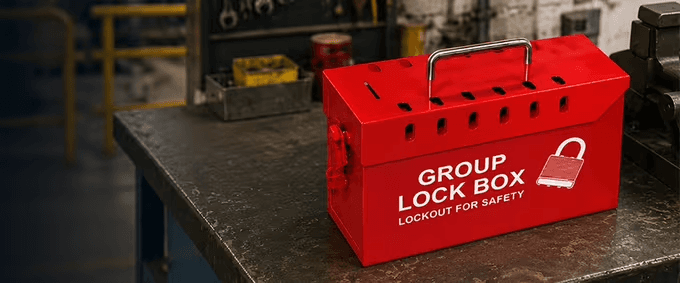
Lockout padlocks
Lockout tags
Plug or battery lockout devices
Hasps for multiple employees
Wheel chocks
Steering wheel covers or warning tags
Procedure cards or checklists
The goal is to make the right lockout tools easy to find and easy to use. When employees have to hunt for equipment, procedures are more likely to be skipped or improvised.
Final Takeaway
Forklift lockout safety protects people, equipment, and productivity. A parked forklift is not automatically a safe forklift. Before maintenance begins, hazardous energy must be identified, isolated, locked out, released, and verified.
By standardizing forklift lockout procedures, training employees, and keeping the right devices available, facilities can help prevent avoidable accidents and make every service task safer from start to finish.